


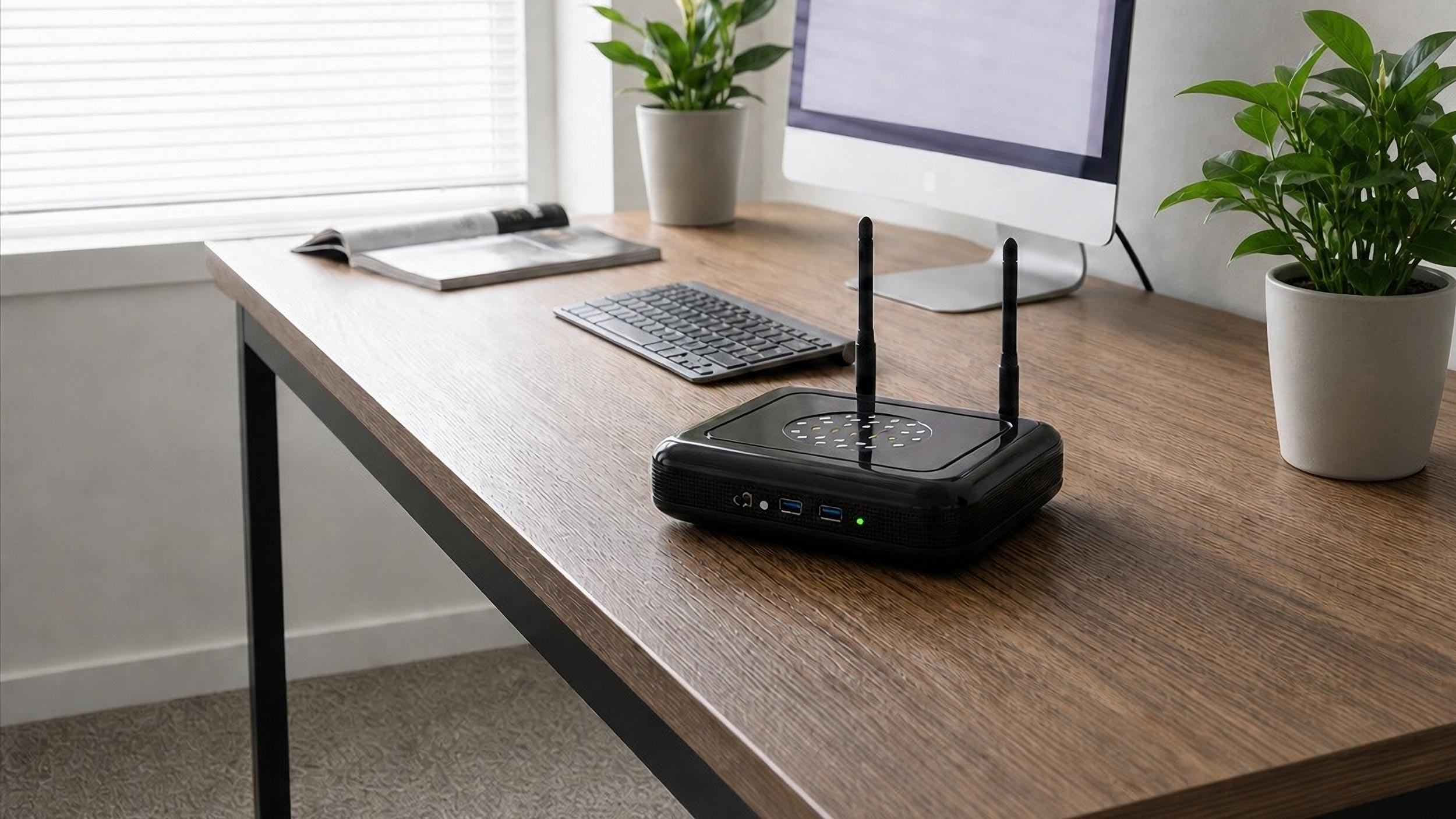
IoT Gateways
Connect machines, protocols and data flows
without adding unnecessary complexity.
An IoT gateway does more than connect a device to the internet.
It helps bridge the gap between local equipment, industrial protocols and the wider digital chain – so data becomes accessible, usable and ready to support better decisions.
That is why we look beyond the gateway itself. We help you choose the right setup for your environment, your interfaces and your operational model – so your gateway does more than pass data through. It helps create control.

A gateway only creates value when it makes complexity manageable.
Many machines, controllers and local systems were never designed to share data easily with modern platforms. They often speak different protocols, use serial interfaces or sit in environments where direct cloud connectivity is not practical.
The value is not the gateway as a box. It is what the gateway unlocks: visibility, integration, remote access and a cleaner path from local infrastructure to usable IoT data.
Data only becomes useful when it can move between systems reliably and securely.
A strong gateway setup helps you:
- Read data from machines, controllers or field equipment
- Bridge protocols and interfaces without rebuilding the whole environment
- Send relevant data securely to the internet or a chosen destination
- Reduce integration friction between operational technology and digital platforms
- Scale from one location to multiple deployments with more consistency
Gateways are most valuable where systems need to work together without starting from scratch.
Typical applications include:
- Reading out industrial machines and controllers
- Connecting serial devices to wider IP-based or cloud-connected environments
- Bridging Modbus-based equipment into a broader IoT setup
- Linking local field data to central dashboards or applications
- Modernising existing infrastructure without replacing every device
- Supporting distributed industrial, utility or infrastructure deployments
The best gateway is the one
that fits the real environment and the real data path.
What needs to be connected?
Sometimes a gateway only needs to read one machine or
controller. In other situations, it has to bridge multiple devices, protocols or local systems. That difference shapes the right architecture from the start.
Which interfaces and protocols matter?
This is usually the core of the gateway decision. Depending on the environment, protocol fit and interface support are primary design factors rather than technical details.
What kind of connectivity does the deployment need?
Not every gateway deployment needs the same network profile. Some applications are built for low-power, lower-bandwidth environments while others require faster or broader connectivity.
How should the data be used afterwards?
A gateway is only valuable if the data ends up somewhere useful. That means the gateway choice should be aligned with downstream visibility, integration and control from day one.

Warm in how we work. Precise in how we deliver.
We help you simplify the chain
So the gateway reduces complexity instead of adding another layer to manage.
We match the setup to the real interfaces
Not just to a product spec, but to the machines, protocols and environments it has to work with.
We think beyond connectivity alone
Because the real challenge is turning local data into usable operational value.
We keep it clear
Short lines, clear choices and no unnecessary complexity.
We stay focused on continuity
Because a gateway only proves its value when data keeps flowing, securely and consistently.
A good gateway is only as strong as the wider chain behind it.
Gateway performance depends on more than the device itself. The local interfaces, the mobile or fixed backhaul, the security model and the management approach all affect whether the data flow stays reliable in practice.
That is why we treat gateway choice, connectivity design and data flow as one decision, not three separate ones.

Gateway deployments become operationally valuable when they stay manageable at scale.
As soon as you move beyond a single gateway, visibility and lifecycle control matter. You need to know what is online, how data is flowing and how to keep devices secure and up to date without unnecessary manual work.
That is why we always look at gateways as part of the wider chain:
- Central visibility into device and data status
- Remote configuration and lifecycle support where appropriate
- Better control over distributed deployments
- Security and access management as part of the setup
- A rollout model that remains supportable as you grow
Different use cases call for different gateway logic.
Serial-to-IP
Gateways
Built for environments where RS232 or RS485-connected equipment needs to be brought into a wider connected setup.
Modbus and Industrial Protocol Gateways
Built for machine and controller environments where protocol bridging matters more than raw bandwidth.
Low-Power Cellular
Gateways
Built for deployments where LTE-M or NB-IoT is the better fit because the application values lean connectivity and efficient rollout over high-speed throughput.
High-Speed and
5G Gateways
Built for environments where higher throughput, broader capacity or more future-oriented infrastructure is required.
Managed Multi-Site
Gateway Deployments
Built for organisations that need one repeatable approach across multiple locations, with central visibility, control and support through a platform-led model.
Want to know which gateway setup best fits your machines, interfaces and data flow?
Request a free demo and we will help you choose the right balance between protocol fit, connectivity, manageability and future scalability – with advice you can actually use in rollout decisions.