


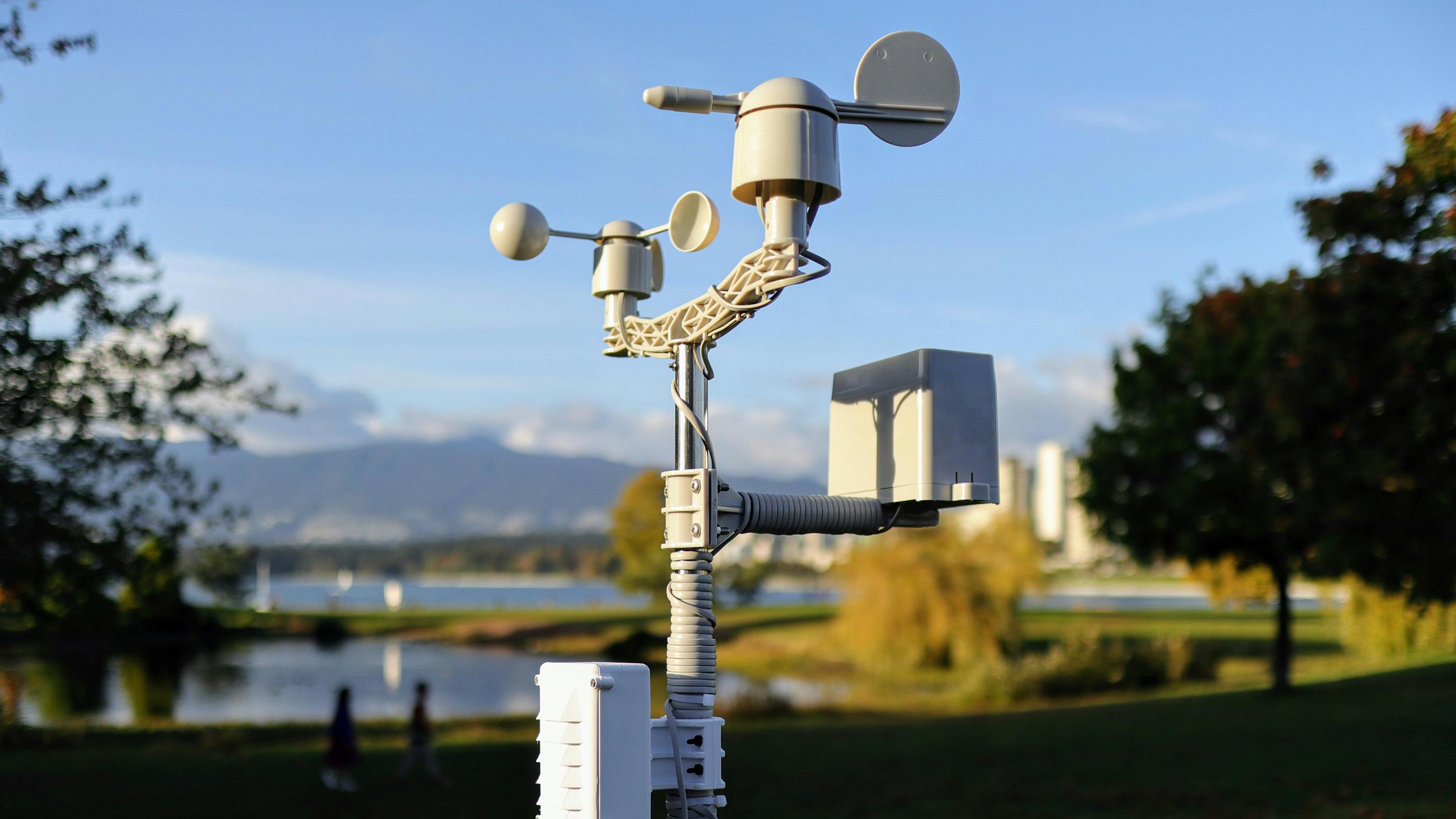
IoT Sensors
Turn real-world conditions into decisions you can act on.
Sensors do more than collect data.
They help you see what is happening in the field, respond earlier and operate with more control.
That is why we look beyond the sensor itself. We help you choose the right sensing setup for your environment, your reporting needs and your connectivity model – so the data you collect becomes reliable, relevant and usable in practice.

A sensor only creates value when the data leads to action.
Most organisations do not need more data. They need the right data, at the right moment, in a form they can actually use.
That can mean monitoring temperature and humidity, tracking fill levels, measuring energy usage, checking indoor air quality or understanding occupancy and movement.
The real challenge is rarely the sensor alone. It is choosing a setup that fits the environment, transmits reliably, integrates cleanly and remains manageable as you scale.
Insight is only useful when
it improves control.
A strong sensor setup helps you:
- Monitor conditions that affect operations, assets or
customer experience - Detect deviations earlier and reduce manual checks
- Improve response times when something moves outside the expected range
- Build more predictable processes with better field visibility
- Scale from a first deployment to a broader operational rollout with confidence
Sensors are most valuable
where earlier visibility reduces
risk or waste.
Typical applications include:
- Temperature and humidity monitoring
- Indoor air quality monitoring
- Fill-level monitoring
- Energy monitoring and pulse metering
- Occupancy and people counting
- Motion, presence or usage monitoring
The best sensor is the one that fits the reality of deployment.
What do you actually need to measure?
The starting point is simple: what condition matters operationally? That might be climate, occupancy, energy flow, distance, movement or equipment status.
What is the deployment environment?
Indoor, outdoor, industrial, utility, logistics or mixed environments all place different demands on enclosure, power source, mounting and range.
How often do you need updates?
Some deployments only need periodic reporting. Others need faster alerts when values drift outside a safe range. That choice affects battery life, connectivity design and total operating cost.
How should the data integrate?
Sensor value only shows up when it reaches the right system in the right format. That can mean dashboards, alerts, operational platforms or building management systems.

Warm in how we work. Precise in how we deliver.
We help you define what really needs measuring
So you focus on the signals that matter, not noise.
We match sensing to the operational reality
Not just to a product spec, but to the environment it has to perform in.
We design for continuity
Because sensing only proves its value when the data keeps flowing reliably.
We keep integration in mind from the start
So the output becomes usable in dashboards, systems and daily decisions.
We stay focused on business value
Because sensors are not there to generate more data. They are there to help you operate better.
A good sensor is only as strong as the connection behind it.
Sensor performance depends on more than the device. Connectivity needs to match the reporting rhythm, the power profile and the environment.
Depending on the use case, the right setup may involve LoRaWAN, NB-IoT, LTE-M or 4G. Long battery life, signal quality, ease of rollout and integration all need to work together in practice. That is why we treat sensor choice and connectivity design as one decision, not two separate ones.

Sensor data becomes operationally valuable when it is easy to manage.
As deployments grow, you need more than devices in the field. You need visibility, lifecycle control and a way to manage the wider chain.
That is why we always look at sensors as part of the wider solution:
- Central visibility into device and data status
- Remote management where supported
- Alerting and reporting for faster response
- Scalable rollout and lifecycle control
- Security and access management as part of the setup
Different use cases call for different sensor logic.
Climate
Sensors
Built for temperature, humidity and environmental monitoring in buildings, storage, logistics and operational environments.
Fill-Level
Sensors
Built for bins, tanks, containers and other assets where visibility into levels helps improve planning and service efficiency.
Energy and Pulse
Monitoring Sensors
Built for measuring consumption, metering activity and creating better visibility into energy-related processes.
Air Quality and
Occupancy Sensors
Built for indoor environments where comfort, compliance, usage patterns or occupancy insight matter.
Custom and Application-Specific Sensors
Built for situations where standard sensing is not enough and the use case requires a more specific setup.
Want to know which sensor setup best fits your use case?
Request a free demo and we will help you choose the right balance between measurement, connectivity, battery life and integration – with advice you can actually use in rollout decisions.